
ADHD Counseling in Santa Clarita, CA

Your phone lights up in the middle of your workday. It’s the school. Before you even answer, you’re already looking at your calendar, wondering what you’ll have to cancel if they ask you to pick up your child again.
Or the teacher says your child had a great day, and twenty minutes later you’re sitting in the driveway while your child cries because you opened the car door for them. You wonder how to explain what happens at home when nobody else sees it.
Either way, you can end up asking the same question at the end of the day. What am I missing, and how am I supposed to figure this out on my own?
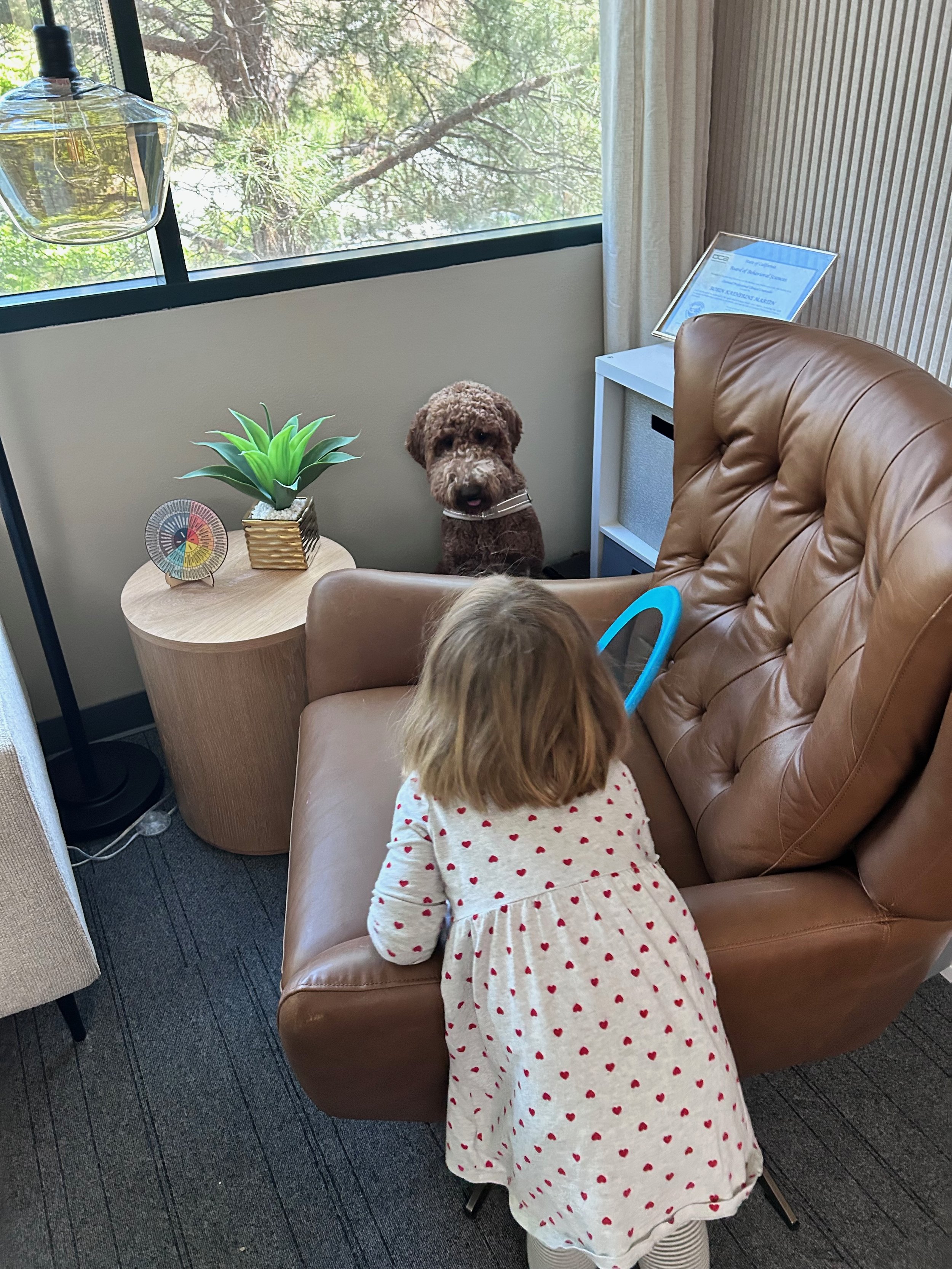
It’s Exhausting to be the One Making the Calls
Robin Martin is a Christian Counselor (LPCC) specializing in children, teens, young adults, and families in Santa Clarita, CA.
It’s Exhausting to be the one making the calls
You called the pediatrician. You got a list of names. One office has a waitlist, another never called back, and you still need to get everybody out the door tomorrow morning. Meanwhile, you’re replaying the last meltdown and wondering if you were too firm, too tired, or too quick to raise your voice.
When you’ve been carrying that much, of course it’s hard to stay steady through one more hard moment. You deserve support, too. And while you’re looking for it, you can start with one part of the day that keeps going sideways
Look What Happened Right Before
The next time school calls, try asking, “Can you walk me through the few minutes before it happened?” You might hear that recess had just ended, there was a substitute, or the class was getting ready for a noisy assembly. At home, you might notice that the hardest moments come when it’s time to turn off a game, get in the car, or leave a birthday party.
Pick one transition and see what changes when you give your child a preview. Before the birthday party, you might say, “When I give you the five-minute signal, pick one last thing you want to do. Then we’ll say goodbye together.” If a countdown usually makes your child more anxious, try a cue tied to the event. “After cake, we’ll say goodbye and head to the car.” Mount Sinai Parenting Center
When the Meltdown is Already Happening, Use Fewer Words
This is the moment when you may feel the most pressure to say something helpful. Give yourself a beat. Drop your shoulders if you can, take one slow breath, and pick one short sentence. “I’m here. We can talk later.” If someone could get hurt, focus first on making space and keeping everyone safe.
Once you’ve both had a chance to settle, come back to it. That might be later in the car or while you’re doing something side by side. Try, “Leaving the party was hard. What would help next time?” If you yelled, you can start with, “I’m sorry I yelled. Let’s try again.” American Academy of Pediatrics
Give Home and School One Thing to Work On Together
If the teacher notices that lining up after recess is especially hard, ask if there’s one cue they can try for a few days, like a quiet heads-up before the whistle. Share what you’re seeing at home, too. “We’re working on stopping a favorite activity. It helps when she knows what her last turn will be.” That gives you both something specific to try and something concrete to talk about the next time you check in.
If the school calls keep coming or your family is bracing for the next meltdown, you’re welcome to reach out to me at SCV Children’s Counseling in Valencia. We can look together at what happens before, during, and after those hard moments and find practical ways to support your child and your family at home and at school.
If you’re struggling to manage ADHD symptoms or finding it hard to set boundaries with rest, let’s talk. I’m here to help guide you through effective strategies for finding balance.
I’m Robin Martin, a LPCC. I work with parents, children, teens, and young adults. If you or a loved one is struggling with ADHD and self-care and you need support, don’t hesitate to reach out. You can contact me directly at 661-670-6157 or visit my website and click here to schedule a consultation. Together, we can explore how to navigate ADHD in a way that works for you or your family.
